Attorney-General urges Supreme Court to dismiss Torkornoo’s review application
 Jormorbi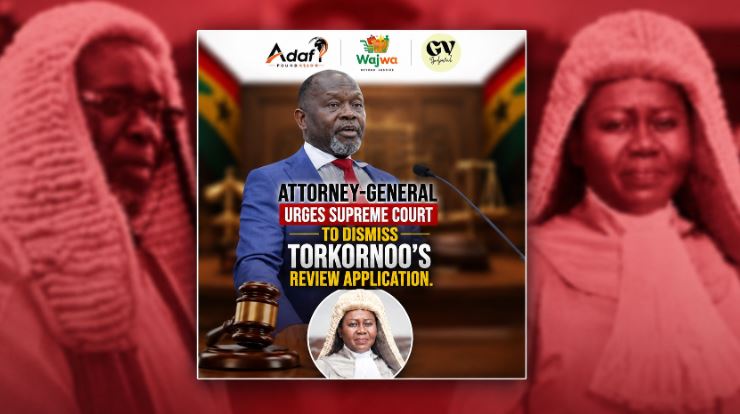
Accra, Ghana – The nation’s legal landscape is poised for a significant development as the Attorney-General has formally requested the Supreme Court to reject a comprehensive application filed by former Chief Justice Gertrude Araba Esaaba Sackey Torkornoo. This legal maneuver seeks to prevent a re-examination of a pivotal ruling issued by the apex court on May 28, 2026, setting the stage for a compelling legal showdown with far-reaching implications for Ghana’s judicial integrity and constitutional framework.
At the heart of this unfolding legal drama is the concept of a review application, a mechanism within the Supreme Court’s jurisdiction that allows for the reconsideration of its own judgments under very stringent conditions. Such applications are not a routine appeal; they represent an extraordinary legal avenue, typically reserved for instances where there has been a manifest error on the face of the record or a miscarriage of justice of exceptional nature. The bar for success in these applications is notoriously high, underscoring the principle of judicial finality and the sanctity of Supreme Court pronouncements.
Former Chief Justice Torkornoo, a figure of immense stature within Ghana’s legal fraternity, having once helmed the nation’s judiciary, is seeking to invoke this rare power. Her decision to pursue a review of the May 28, 2026 judgment speaks volumes about the perceived gravity of that initial ruling and its potential ramifications. While the specifics of the original case remain under wraps as the process unfolds, the very involvement of a former head of the judiciary in such an appeal elevates its significance, prompting a national conversation about accountability, legal recourse for high office holders, and the consistency of justice.
The Attorney-General, as the principal legal advisor to the government and the chief prosecutor for the state, has taken a firm stance against the former Chief Justice’s bid. This intervention is not merely procedural; it signifies a robust defense of the original judgment and, by extension, the state’s interest in upholding judicial certainty. The Attorney-General’s argument is expected to hinge on the established legal precedents that govern review applications, emphasizing the need to maintain the finality of Supreme Court decisions to preserve stability and public confidence in the judicial system. Their position underscores a fundamental duty to protect the integrity of the courts and ensure that legal processes, even for the most distinguished individuals, adhere strictly to constitutional and procedural norms.
For Ghana, a nation committed to democratic governance and the rule of law, this development carries profound implications. The spectacle of a former Chief Justice challenging a decision of the very court she once led could be interpreted in various ways. On one hand, it could be seen as an affirmation that no individual, regardless of their past office, is above the law or beyond seeking legal redress. This reinforces the principle of equality before the law. On the other hand, it could potentially spark debates about judicial cohesion and the perception of finality within the highest court, particularly if the grounds for review are seen as insufficient by a segment of the public or legal commentators.
The long-term public impacts of this legal battle are multifaceted. Should the Supreme Court entertain the review application, it could set a precedent regarding the conditions under which former judicial leaders may seek redress against the highest judicial decisions. Conversely, a dismissal would firmly reiterate the Supreme Court’s reluctance to revisit its own carefully considered judgments, reinforcing judicial finality. This case could also influence public perception of the judiciary’s independence and its ability to objectively handle cases involving its own past members, solidifying or challenging public trust in institutions that are vital for democratic stability.
Moreover, the outcome will inevitably contribute to the jurisprudence surrounding review applications in Ghana, potentially refining the legal framework and criteria for such extraordinary judicial interventions. It will highlight the delicate balance between ensuring justice is served and maintaining the stability and authority of judicial decisions. The engagement of the Attorney-General on behalf of the state further accentuates the public interest element, demonstrating how legal disputes, even those initiated by individuals, can have significant constitutional and governmental ramifications.
In essence, the Supreme Court’s impending decision on the Attorney-General’s request will be more than just a procedural ruling; it will be a defining moment for Ghana’s legal system. It will underscore the resilience of the nation’s democratic institutions, test the principles of judicial accountability and independence, and ultimately help shape the trajectory of legal precedent for years to come. The nation watches keenly as the highest court prepares to navigate this complex and historically significant legal challenge.